

Pond De-Icer vs. Bottom Diffused Aeration: What You Actually Need
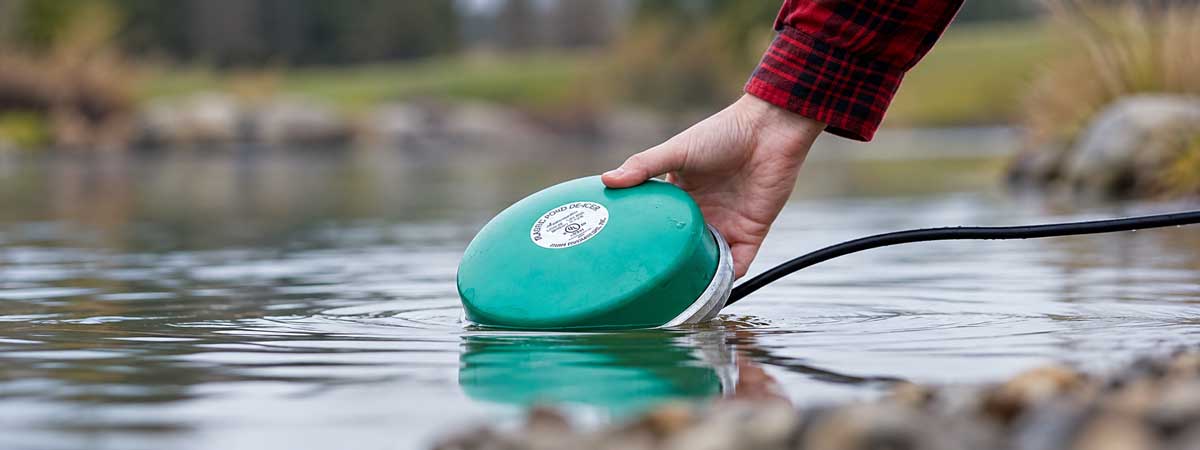
For a pond that freezes, you have two good ways to maintain an opening in the ice: a pond de-icer or a bottom-diffused aeration system. A de-icer uses heat to keep an opening, while aeration can keep an opening through water movement and circulation.
The important part with aeration is where you place the diffuser. In summer, air diffusers are often positioned in the deepest part of the pond to circulate the entire water column. In winter, that can be counterproductive. Moving the diffuser to a shallow location near the surface allows it to maintain an opening while preserving the pond's natural thermocline, leaving the warmer water near the bottom relatively undisturbed.
Why the Hole in the Ice Matters
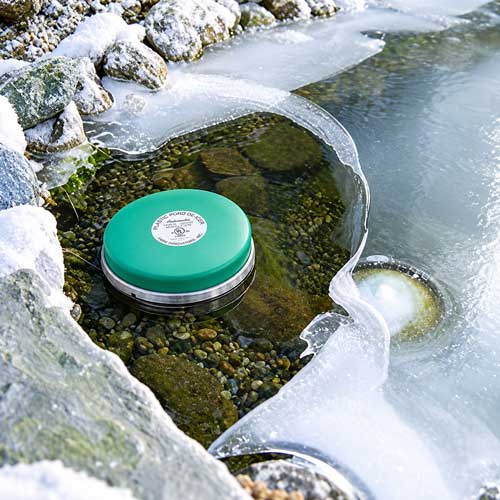
When a pond freezes completely, the surface becomes a sealed lid. Meanwhile, leaves, sludge, plants, and other organic material continue breaking down beneath the ice. That process consumes oxygen and produces gases. With no open surface, there is little opportunity for those gases to escape or for oxygen to enter the water.
That is why maintaining an opening in the ice is so important.
Every spring, our Pond Techs hear from pond owners who found fish losses after a winter when their pond stayed completely frozen for an extended period. The fish may have gone into winter looking perfectly healthy, but conditions beneath a solid sheet of ice can change over time.
One small opening can make a significant difference. Whether you maintain it with a de-icer or properly positioned aeration, the goal is the same: provide a path for proper gas exchange.
What a De-Icer Does
A floating pond de-icer is a simple winter tool: a thermostatically controlled heating element that keeps an opening in the ice. It is not designed to heat the pond. Its job is simply to keep a small area of water exposed when the rest of the pond is frozen.
For most backyard ponds, our Pond Techs generally look at 100–300 watts for smaller ponds in moderate winter climates, and 500 watts or more for large ponds or severe winter exposure. Pond size, depth, climate, wind exposure, and the amount of ice you normally experience all matter, so wattage should be treated as a starting point rather than a one-size-fits-all rule.
The advantage of a de-icer is simplicity: plug it in, position it correctly, and let the thermostat take over.


What Bottom-Diffused Aeration Does
Bottom-diffused aeration can also maintain an opening in the ice, but it works without heating any water. An air pump sends air through a diffuser, creating rising bubbles that move water toward the surface. That movement can prevent the immediate area around the diffuser from freezing and maintain an opening for gas exchange.
The key is winter diffuser placement.
During the warmer months, a bottom diffuser is typically placed in the deepest part of the pond to circulate and oxygenate the entire water column. Winter is different. Fish often take advantage of that warmer bottom layer during this time. Running a diffuser directly on the bottom can disrupt that natural layering by bringing cold surface water down and mixing the entire pond.
Instead, relocate the diffuser to a shallower area near the surface. This allows the aeration system to continue providing circulation and maintain an opening while leaving the deeper, warmer water relatively undisturbed.
The Winter Pair: De-Icer Plus Air
For many ponds, a de-icer and aeration system can work together, with each doing a different job.
The de-icer provides a reliable opening through direct heat. The aerator provides water movement and oxygenation while helping maintain an opening around the shallow diffuser. Using both can be particularly useful for larger ponds or ponds with heavier fish loads. Having both systems can also provide some backup if one fails.
But you don't necessarily need both.
If you already have an aeration system, moving the diffuser to a shallow location may be all you need to maintain an opening through the winter. If your primary goal is simply keeping an opening in the ice and you don't want to run an air pump, a thermostatically controlled de-icer is a straightforward solution.
Setup That Works
Where It Sits
If you're using a floating de-icer, place it in the pond according to the manufacturer's instructions. Try to keep it in an area protected from wind. During extreme conditions, high winds can easily carry away heat from the de-icer. Keep it accessible enough that you can check it throughout the winter.
If you're using aeration, move the diffuser from the deepest part of the pond to a shallow location near the surface before the pond freezes. The exact depth depends on the pond, but the goal is to create enough surface movement to maintain an opening without aggressively mixing the deeper water.
The Power Question
A de-icer and an aeration system have different power requirements.
A thermostatically controlled de-icer draws power when conditions require it, so it does not necessarily operate continuously throughout the winter. An aeration system can generally run continuously, although its power consumption is often considerably lower than that of a heating element.
Common Questions About Pond De-Icers
Do I Need a De-Icer for My Koi Pond?
Not necessarily. If you already have a properly sized aeration system, moving the diffuser to a shallow location near the surface can help maintain an opening in the ice while preserving the warmer water below. A de-icer is another way to maintain that opening and may be the simpler choice if you don't already have aeration.
What Size De-Icer Do I Need?
The right wattage depends on pond size and winter conditions. As a general starting point, our Pond Techs look at roughly 100–300 watts for smaller ponds in moderate climates and 500 watts or more for large ponds or severe freezes. Wind exposure and typical ice thickness can also affect the recommendation, as can the number of de-icers required.
Can a De-Icer Run All Winter?
Yes. Thermostatically controlled pond de-icers are designed for winter operation and activate when conditions require them. They are not continuously heating the pond. Proper installation and safe outdoor electrical connections are important for reliable winter operation.
Will My Fish Survive Winter Without a De-Icer?
Yes, they can. A de-icer is not the only way to maintain an opening. A properly positioned aeration system can also keep an area of the surface open in many winter conditions.
The important thing is maintaining gas exchange. If your pond regularly freezes solid and neither a de-icer nor properly positioned aeration keeps an opening, the sealed surface can become a winter risk.
The Opening Is the Objective
Winter pond care is not about keeping your fish warm. Koi and goldfish are adapted to cold water, and the pond's natural thermal structure gives them a stable place to spend the winter.
Keep an opening in the ice with a de-icer or properly positioned aeration. If you're using an air pump, move the diffuser to a shallow location near the surface rather than continuing to aggressively mix the deepest water. That allows you to maintain gas exchange while preserving the natural thermocline where fish can spend the coldest months.
If you're not sure what your pond needs, email our Pond Techs with your pond size, depth, location, and typical winter conditions. We can help you determine whether a de-icer, winter aeration, or both make sense for your pond and how to set it up properly.
Article Posted: 10/13/2026 06:47:26 AM
