

Running a Pond Waterfall in Winter: Run or Shut Down?

Both choices are legitimate: running a waterfall in the winter can work well in mild climates, while shutting it down is often the safer option where hard freezes are common. The right decision depends on how cold your winters get, and how often you can check the system during cold snaps. A running waterfall obviously keeps water moving and can maintain some open water, but it also brings risks that are easy to overlook. Shutting down removes those risks, provided you winterize the equipment properly. Our Pond Techs walk through both options, how to handle the pump and plumbing, and what your fish need when the waterfall stops.
The Case For Running It
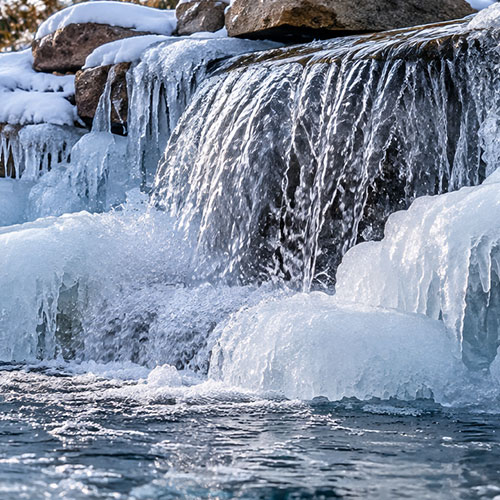
There is something special about a running waterfall in the winter. Ice formations along the rocks, the sound of moving water, and a pond that remains active through the cold months can make a backyard landscape even more interesting. Beyond appearance, a running waterfall keeps water moving and can help maintain open water near the falls.
In regions with mild winters, running the waterfall through the winter is common and can work well. Moving water generally freezes less readily than still water, but remember, moving water is not the same as freeze protection. A running waterfall can gradually build ice around the edges, and a prolonged cold snap can change the situation quickly. Running a waterfall in the winter makes sense depending on your local conditions and your willingness to monitor the pond.
The Risk Worth Mentioning
The biggest risk are ice formations at the base of the falls, called an ice dam. As water flows over rocks and ledges, ice can gradually build up along the edges. Eventually, that ice can redirect water away from its intended path. Instead of returning to the pond, water may spill over the liner's edge and out of the pond.
The pump keeps running, quietly lowering the pond's water level. Snow can hide the problem even more, so you might not notice anything is wrong until the water level is alarmingly low. Fish can become stranded, and a pump running without enough water can be damaged.
Running a waterfall through a hard-freeze isn't necessarily impossible, but it requires commitment. You need to inspect the falls after cold snaps, watch the pond level, and be ready to shut the system down if ice begins redirecting water.
The Case For Shutting Down
In regions with prolonged freezing temperatures, shutting down the waterfall is often the simpler, lower-risk choice. You eliminate the possibility of an ice dam diverting water over the liner edge, and you can properly protect your pump, plumbing, and filtration equipment before winter settles in.
Your fish don't need a waterfall to survive winter. They need suitable water conditions and gas exchange at the surface. Bottom diffused aeration and/or a floating pond de-icer can help maintain an opening in the ice without requiring the waterfall to run.
De-icers vs. Bottom Diffused Aeration ›How To Shut Things Down Right
The Pump
Before temperatures drop below freezing, turn off the pump and remove it if the manufacturer recommends winter storage. Clean away debris and inspect the intake for damage or wear. Follow the manufacturer's instructions for storage - some pumps should be stored wet while others can be stored dry.
Don't assume every pump has the same winter requirements. Our Pond Techs can help you determine the proper storage procedure for any model we sell. Taking care of the pump now can save you from an unpleasant surprise when spring startup arrives.
The Plumbing
Water left standing in plumbing is a common cause of winter damage. When that water freezes and expands, it can crack pipes, fittings, check valves, and filter housings.
Disconnect and drain plumbing, empty the waterfall basin, and any external filter that could trap water. Make sure low points in the plumbing aren't holding water that can't drain naturally.
Don't overlook small fittings and valves. A little water trapped in the wrong spot can cause a frustrating repair in spring. If you're unsure how your system drains, reach out to our Pond Techs before temperatures fall.
What Happens With No Flow
Once the waterfall is shut down, and you anticipate the surface freezing, you still need a plan for proper gas exchange. Without it, toxic gases become trapped and oxygen cannot get down to the fish.
Either bottom diffused aeration or a floating pond de-icer can help maintain an opening in the ice. If you're using aeration, position the air diffuser near the surface during winter instead of leaving it on the bottom. This helps avoid disrupting the warmer water your fish need near the pond floor.
Shop Pond De-Icers ›If You Run It: The Winter Checklist
If you decide to keep running your waterfall, treat winter operation as an ongoing responsibility rather than a set-it-and-forget-it project.
Start by walking the entire waterfall after every significant cold snap. Look for ice buildup that could redirect water, especially along the edges, behind rocks, and around the point where water returns to the pond. Check that the stream is following its normal path.
Watch your pond's water level, too. An unexplained drop during winter deserves immediate attention. If water is escaping over the liner edge, shut the pump off before the level falls far enough to put fish or equipment at risk. Keep a garden hose indoors for those emergency fills. The last thing you want to find is a frozen hose when you need it most.
Keep a de-icer available even if the waterfall usually maintains open water. Flow alone does not guarantee an opening during an extended freeze.
If you can't reliably check the pond during cold snaps, shutting down is probably the better choice.
Warm Climates: Run It And Enjoy It
If hard freezes aren't part of your winter, there's generally no reason to shut down a healthy, properly functioning waterfall just because the calendar says winter. Keep the pump running, maintain your normal filter-cleaning schedule, and continue monitoring water quality.
In warmer climates, the waterfall can remain a valuable part of the pond's circulation and filtration system throughout the year. You may still need to adjust feeding, debris removal, and water care as conditions change, but winterization usually isn't necessary.
The Year-round Pond Blog ›Common Questions About Waterfalls In Winter
Should I turn off my pond pump in winter?
Deep freezes generally favor shutting down the waterfall, while mild winters often favor running it. Either approach can work when done correctly. Consider your local climate, plumbing design, and how often you can inspect the system during freezing weather.
Will a running waterfall guarantee to keep my pond from freezing?
No, a running waterfall is not a substitute for a de-icer during a hard freeze. Moving water may help maintain some open water near the falls, but moving water can still freeze. Prolonged cold weather can overwhelm the benefits of circulation.
Can the plumbing burst if I leave it?
Yes, standing water in plumbing can freeze, expand, and crack pipes, fittings, and filter housings. That's why proper shutdown includes draining the lines, emptying external filters, and removing trapped water wherever possible. Follow the equipment manufacturer's winterization instructions.
Do my fish need the waterfall in winter?
No, your fish don't need the waterfall itself to survive winter. They need appropriate water conditions and gas exchange. Bottom diffused aeration or a floating de-icer can help maintain an opening in the ice when the waterfall is shut down.
Decide Once, Sleep Easy
Running your waterfall through the winter can be beautiful and practical in the right climate. Shutting it down can be the smarter choice when hard freezes are common. Neither option is automatically right for every pond. The key is choosing the approach that fits your winter conditions and your willingness to maintain the system.
If you plan to run it, commit to checking the waterfall and water level after cold snaps. If you shut it down, drain the plumbing, store the pump correctly, and set up your winter aeration and/or de-icer before the ice arrives.
Not sure which route makes sense? Email our Pond Techs your city/state and current pump and filtration setup. We'll help you determine whether running your waterfall or shutting it down is the better fit for your pond.
Article Posted: 10/27/2026 03:32:40 PM
